How to Reduce Gynecomastia Naturally
Most men who search for a natural fix want an honest answer, so we will give one. True gynecomastia is glandular tissue, and glandular tissue does not shrink through diet, exercise, or supplements.
Not every enlarged male chest is true gynecomastia, though. Some men have chest fat, which does respond to weight loss. At the Connecticut Gynecomastia Center, our surgeon sees both, and the difference decides how much you can change on your own.
This article covers what causes the condition, what lifestyle changes can and cannot do, how to lower your risk before tissue develops, and when surgery becomes the only reliable option.
Key Takeaways
Gynecomastia and Chest Fat Are Not the Same Thing
This distinction drives every decision that follows. Men often spend a year on diet and cardio before anyone explains it to them.
What True Gynecomastia Feels Like
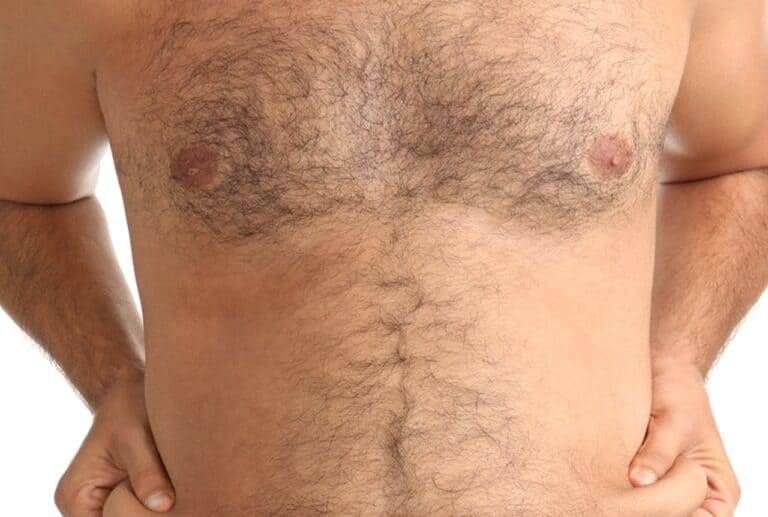
Gynecomastia is the growth of actual breast gland tissue in men. You can usually feel it as a firm, rubbery disc directly behind the nipple. It may feel tender or sore, especially early on.
The tissue often sits in a defined circle rather than spreading evenly across the chest. Many men notice it on one side first.
What Chest Fat Feels Like
Pseudogynecomastia is fat, not gland. It feels soft throughout and spreads across the chest without a distinct lump behind the nipple. It rarely hurts.
This is the version that responds to weight loss, and it is why some men online report that diet fixed their chest. They likely had fat.
Why the Difference Matters
Fat cells shrink when you lose weight. Gland cells do not. A man with true gynecomastia can drop thirty pounds, reach a lean body fat percentage, and still see the same disc under his nipple. In some cases it looks more obvious afterward, because the surrounding fat that once blended into it is gone.
What Causes True Gynecomastia
Hormone shifts drive most cases. Breast gland tissue grows when estrogen activity rises relative to testosterone activity, and several situations create that shift.
- Puberty: Temporary hormone swings cause breast tissue in a large share of adolescent boys, and it usually fades within a year or two.
- Age: Testosterone declines gradually after midlife, which raises risk for men over 50.
- Medications: Certain prostate drugs, heart medications, ulcer treatments, and psychiatric medications list breast tissue growth as a known effect.
- Anabolic steroids and prohormones: These convert to estrogen in the body and cause some of the most severe cases our surgeon treats.
- Health conditions: Liver disease, kidney disease, thyroid disorders, obesity, and certain tumors all disturb hormone balance.
- Alcohol and marijuana: Heavy, sustained use of either affects how the body processes hormones.
Once the gland develops, the original cause matters less than most men expect. Removal of the trigger stops further growth, but it does not reliably reverse tissue that has already formed.
Why Diet and Exercise Cannot Remove Glandular Tissue
Breast gland tissue behaves like other glandular tissue in the body. It is not an energy store, so your body does not break it down for fuel when you eat less.
There is also a time factor. In the first months after gynecomastia appears, the tissue is still active and inflamed. Over roughly six to twelve months, it becomes fibrous and scarred. Fibrous tissue does not respond to hormone changes, medication, or anything you do in a gym.
This is the honest reason that most natural gynecomastia advice fails. It targets fat, and fat was never the problem.
Chest exercises deserve a specific note. Bench presses and push-ups build the pectoral muscle underneath the gland. A larger muscle can push the tissue forward and make it more visible, not less. Men who train hard and stay lean are often the ones most bothered by what remains.
The Cases That Can Still Improve on Their Own
Natural improvement is real in a narrow set of situations. Three of them account for nearly all the success stories.
A Recently Started Medication or Substance
If your chest changed within the past few months and you started a new prescription, supplement, or steroid cycle in that same window, you may have a chance. Talk to the prescribing doctor about alternatives before the tissue matures. Never stop a prescription on your own.
Puberty
Adolescent gynecomastia resolves without treatment in most boys, usually within one to two years. Our surgeon typically recommends observation first for younger teens, unless the tissue is large, painful, or clearly affecting daily life.
Chest Fat Rather Than Gland
Pseudogynecomastia responds well to sustained weight loss. Men in this group get real results from the same habits that fail everyone else, which is exactly why the advice keeps circulating.
If your gynecomastia falls outside these three categories, lifestyle change will not remove it. That is not a reason to skip healthy habits, but it is a reason to stop waiting for them to work.
How to Lower Your Risk
Prevention is a separate subject from treatment. These steps help men who do not yet have gynecomastia, and they help anyone who wants to avoid a recurrence after surgery.
- Skip anabolic steroids and prohormones: This is the single largest preventable cause our surgeon sees in younger men.
- Keep alcohol moderate: Long-term heavy drinking affects liver function and hormone processing.
- Review new prescriptions: Ask your doctor whether a new medication has breast tissue growth as a known effect, especially if you have had gynecomastia before.
- Maintain a stable weight: Excess body fat raises estrogen production, which increases risk over time.
- Treat underlying conditions: Thyroid, liver, and kidney problems deserve proper medical management for reasons that go well beyond your chest.
- Act early on changes: Tissue caught in its first few months has options that tissue at two years does not.
What Diet and Exercise Can Actually Do for Your Chest
We are not telling you to stop. We are telling you what to expect.
Fat loss reduces the fat portion of your chest, which improves your contour if fat makes up part of the problem. Most men have some combination of fat and gland rather than one or the other, so weight loss often produces partial improvement.
Balanced strength training across the chest, shoulders, and back improves posture and overall proportion. A broader upper body changes how the chest reads, even when the gland stays.
Regular exercise, decent sleep, and lower stress all support healthier testosterone levels. That helps prevent new tissue growth and supports your general health.
What none of this does is remove the disc behind your nipple. Set your expectations there, and you will not waste a year.
How to Tell Which One You Have
Lie on your back and press two fingers flat against the tissue behind your nipple. A firm, distinct mass with a defined edge points toward a gland. Soft, even tissue with no clear border points toward fat.
Self-checks have limits, though. Our surgeon can identify the tissue type during a brief exam and order bloodwork if a hormone problem seems likely.
Schedule a gynecomastia evaluation sooner rather than later if any of the following apply:
- Rapid growth: Tissue that appears or enlarges quickly deserves prompt attention.
- Pain or a hard lump: Persistent pain, a hard mass, or discharge needs a medical exam.
- One side only: Single-sided changes should be examined, though they are usually not serious.
- No change after six months: Consistent diet and exercise with no improvement generally confirms glandular tissue.
A consultation does not commit you to surgery. Our team uses that visit to identify what you actually have and explain your real options.

Treatment That Works for Glandular Tissue
Our board-certified plastic surgeon recommends the least invasive gynecomastia approach that fits your situation.
- Medication changes: A change or a stop under medical supervision can help when a drug caused a recent case.
- Hormone evaluation: Bloodwork sometimes reveals a treatable imbalance, particularly in men with other symptoms such as low energy or reduced sex drive.
- Male breast reduction surgery: Surgery is the only reliable way to remove established glandular tissue. Our surgeon performs the procedure in Connecticut under local or general anesthesia and removes both the gland and any excess fat in the same operation.
Results from surgery are permanent as long as the original cause does not return. That is where the prevention habits above earn their place.
Your Next Step
Honest information saves time. If you have chest fat, the habits in this article will work, and you can start tomorrow. If you have glandular tissue, no amount of effort will dissolve it, and a year spent testing is a year you do not get back.
Our doctor at the Connecticut Gynecomastia Center will tell you which one you are dealing with and what your gynecomastia treatment options are, including the option to do nothing. Schedule a private consultation to get a clear answer about your chest.